

Key Points:
- The right sod for a property is determined by its conditions, namely sun, shade, slope, soil, and how the lawn will be used.
- In the Upstate, Zoysia and Bermuda are warm-season grasses that turn tan in winter, while tall fescue stays green year-round but needs some relief from summer heat.
- Installation timing follows the grass: fall is the window for tall fescue, while warm-season sod roots most reliably when it goes down in mid-to-late spring.
Sod has an obvious appeal: within a single day, bare soil becomes a finished lawn, with the clean edges and full coverage that seeding can take a season or more to achieve. That immediacy, however, can obscure the decision that matters most. The grass growing in those rolls will determine whether the lawn still looks finished three summers from now, and even careful installation cannot fully compensate for a species that is poorly suited to the ground beneath it.
This article examines how grass selection works on residential properties in the Upstate: the turfgrasses that perform here, the site conditions that inform the choice, and how the calendar affects when each grass should go down. For a broader look at why homeowners choose sod over seed in the first place, see our overview of the key benefits of sod installation.
Why Grass Selection Comes Before Installation
Request sod proposals from several landscaping companies in Greenville, SC, and you may receive several different grass recommendations. That variation is in part because the Upstate supports more than one viable lawn grass, and the right choice depends on the property’s specific microclimate and sun and shade condition.
Clemson University’s Home and Garden Information Center insists that choosing the proper grass is the most important step in establishing a lawn, and specifically cautions against letting installation cost drive the decision. A grass that is inexpensive to lay but poorly matched to its site tends to cost more over time, through thinning, weed pressure, disease, and eventual replacement.1
Warm-Season vs. Cool-Season Grasses
Lawn grasses fall into two broad groups, and that distinction shapes nearly everything about how a lawn looks and behaves through the year. These are:
- Warm-season grasses: Zoysia, Bermuda, Centipede, and St. Augustine grass grow vigorously in summer heat and go “dormant” (a natural resting state) in winter, turning tan until they green up in spring.
- Cool-season grasses: Tall fescue grows most actively in the mild temperatures of spring and fall, stays green through winter, and can struggle during extended stretches of summer heat.
The Upstate offers a choice that the rest of South Carolina does not. Tall fescue survives year-round in the state only in the mountains and the upper Piedmont, where higher elevations temper the worst of the summer heat. The region sits toward the southern edge of what turf specialists call the “transition zone,” a band of the country where both warm- and cool-season grasses can succeed but neither is entirely at home.2 That flexibility is an advantage, but it also makes the choice more consequential.
The Grasses Worth Considering for an Upstate Lawn
Each of the principal candidates brings a distinct combination of appearance, durability, and level of requisite maintenance. Here is how they compare:
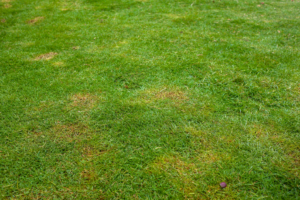
- Zoysia: Dense, finely textured, and deep green in season, Zoysia produces the carpet-like surface many homeowners associate with a formal lawn. It tolerates partial shade far better than Bermuda and holds up well to foot traffic, though it grows slowly, recovers from damage gradually, and requires a disciplined maintenance program.
- Bermuda: Bermuda is among the most wear- and drought-tolerant lawn grasses, and it recovers quickly from damage (which is why it is so common on athletic fields). It needs full sun and frequent mowing in summer. Bermuda also spreads aggressively, so it requires well-defined edges to stay out of planting beds.
- Tall fescue: The only grass in this group that stays green through winter, tall fescue performs well in heavier clay soils and on sites with some afternoon shade. Because it grows in clumps rather than spreading by runners, it does not repair itself the way Zoysia and Bermuda do, and it typically needs periodic fall overseeding to stay thick.
- Centipede: A light, apple-green grass suited for acidic soils, Centipede needs less fertilizer and mowing than most alternatives. It does not tolerate heavy traffic well, though, and it is prone to winter damage on north-facing slopes and in shade.
Assessing the Site: Sun, Slope, Soil, and Use
Choosing among these grasses means examining the property closely, ideally at different times of day and in different seasons. These conditions should be considered:
- Sunlight: Bermuda needs sun for most of the day, while Zoysia and tall fescue can tolerate partial shade. Light conditions also shift through the year as deciduous trees leaf out, so an area that looks sunny in March may sit in heavy shade by June.
- Slope and orientation: The direction a slope faces affects how much heat it absorbs. Tall fescue often suffers on open, south-facing slopes during summer, while Centipede grass on north-facing slopes is vulnerable to winter kill.
- Soil: Upstate soils are clay-heavy, and new construction typically leaves them compacted. A soil test conducted well ahead of planting allows time to correct pH and nutrient levels, and compacted subsoil should be loosened before any sod is laid.
- Use: A lawn that hosts children, dogs, and frequent entertaining calls for strong wear tolerance and recovery, which favors Bermuda or Zoysia. A front lawn that is primarily ornamental may prioritize texture and color over durability.
- Maintenance expectations: Bermuda requires frequent summer mowing, Zoysia’s finest appearance often calls for a reel mower, and tall fescue generally needs fall overseeding. The grass should match the level of care the property will realistically receive.
That is why, in our approach to landscape design, Greenville, SC, properties are evaluated lot by lot. Conditions vary enough from one property to the next that two houses on the same street can easily end up with different lawns.
Timing the Installation
Sod can technically be installed during most of the year in South Carolina, but mid-to-late spring and fall are the most favorable periods. Soil temperatures in the high 50s to low 70s can help grass seeds germinate more quickly. Fall installations need to be finished early enough for roots to grow into the underlying soil before cold weather freezes arrive, and summer installations require heavy watering to keep the sod from drying out.3
In practice, the grass sets the calendar:
- Tall fescue: Fall is its natural planting window. Cooler temperatures allow roots to develop through autumn, giving the lawn firm footing well before its first summer.
- Warm-season grasses: Zoysia and Bermuda root most reliably while actively growing, from mid-to-late spring into early summer. Sod laid in late fall or winter goes down dormant, and whether it survives depends heavily on the winter that follows.
This makes fall a productive season for planning, even when the grass of choice is warm-season. A homeowner who wants a Zoysia lawn next spring can use the cooler months to complete soil testing and amendments, correct drainage, finish grading, and install or adjust irrigation, so the sod can go down as soon as conditions favor it.
Installation Details That Protect the Investment
Grass selection has everything to do with a lawn’s potential. Proper installation of that grass determines how much of that potential is realized. When a project includes landscape architecture, Greenville, SC, homeowners will usually see lawn areas, grading, and drainage defined on the plan before any sod is ordered. This is when grass selection should be made as well.
Our sod and turf installation process begins with a soil evaluation and grading, because a finished lawn can only be as level and well-drained as the surface beneath it. Here are a few details about the rest of the process:
- Fresh sod: Sod loses vigor quickly once harvested, so it should be delivered fresh and laid promptly.
- Tight, staggered seams: Pieces are butted closely without overlapping or stretching, with joints offset in a brick-like pattern, since sod shrinks as it dries and stretched pieces open gaps.
- Clean transitions: The soil is graded slightly below adjacent walkways, patios, and drives so the finished turf meets hardscape edges cleanly.
- Rolling and watering: Rolling presses the sod into full contact with the soil, and thorough watering in the first weeks keeps the root zone moist until new roots take hold.
We also walk homeowners through aftercare at installation, since the watering schedule and the timing of the first mowing have a major effect on how quickly the lawn establishes.
When Synthetic Turf Makes More Sense
Natural grass is not the right answer for every part of a property. Every turf grass needs some direct sun, and beneath a dense hardwood canopy even the most shade-tolerant species will thin over time.
Synthetic turf provides a consistently green surface with virtually no mowing or watering, and it is usable immediately after installation. It tends to suit a few specific situations:
- Deep shade: Areas under mature trees where grass has repeatedly failed.
- Dog runs and play areas: Spaces subject to heavy, concentrated, daily wear.
- Putting greens and compact courtyards: Applications that call for a uniform surface or where mowing is impractical.
Many properties combine the two, with natural sod across the main lawn and synthetic turf in the areas where grass cannot reasonably succeed.
Plan Your New Lawn With Reedy River Landscapes
Choosing a lawn grass is a decision you will live with for years, and it deserves the same attention as any other elements of the landscape. If you are comparing landscapers in Greenville, SC for a new lawn, Reedy River Landscapes can evaluate your property’s light, slope, soil, and intended use, recommend the grass that fits those conditions, and install natural sod or synthetic turf with the care each surface requires. Contact our team to schedule a consultation and talk through the right lawn for your property.
Frequently Asked Questions
Can sod be installed in the fall in Greenville?
Yes, and for tall fescue, fall is generally the preferred season. Warm-season sod such as Zoysia or Bermuda can also go down in early fall, provided it has enough time to root before cold weather. Later in the season, warm-season sod is installed dormant, and its establishment becomes less predictable.
Which lawn grass stays green through the winter?
Tall fescue is the only common Upstate lawn grass that remains green year-round. Zoysia, Bermuda, and Centipede turn tan during dormancy and green up again in spring. Some Bermuda lawns are overseeded with annual rye grass in the fall for winter color, though this adds mowing and care through the cooler months.
Is St. Augustine grass a good choice for an Upstate lawn?
Not usually. St. Augustine has limited cold tolerance, which makes it a riskier choice in the Upstate than in the Midlands or along the coast. Zoysia is generally the more dependable warm-season option for partially shaded Upstate sites.
Does a sod lawn need an irrigation system?
New sod needs consistent moisture until it roots, and quality turf generally requires irrigation over the long term. A hose and sprinkler can work for smaller areas, but a professionally designed irrigation system makes both establishment and ongoing care far easier to manage, particularly on larger lawns.
References
- “Selecting a Lawn Grass,” Home and Garden Information Center, Clemson University, January 2016, https://hgic.clemson.edu/factsheet/selecting-a-lawn-grass/.
- Christine Menapace, “Turfgrass In The Transition Zone,” Turf Magazine, February 2024, https://turfmagazine.com/turfgrass-in-the-transition-zone/.
- “Turf 101: Optimum temperatures for seed germination,” Turfgrass Science at Purdue University, August 2005, https://turf.purdue.edu/turf-101-optimum-temperatures-for-seed-germination/.

Luke founded the company in 2016 and has loved growing the business ever since. He’s passionate about helping our leaders develop and seeing people reach their full potential—it’s one of his favorite parts of the job. Luke enjoys meeting new people and transforming their goals and challenges into beautiful, functional outdoor living spaces. When he’s not working, you’ll often find him spending quality time with his family around the community—whether that’s at the farmers market, CrossFit, or enjoying any kind of outdoor activity.

